
The Most Important Cannabis Farm in America
Mindset Invests in LEEF Brands

When I first drove out to Salisbury Canyon Ranch (SCR), owned by LEEF Brands (OTC: LEEEF, CSE: LEEF), I couldn’t understand why anyone would try to grow cannabis in the middle of nowhere. My cell phone stopped working about half an hour before I reached the farm.
Salisbury Canyon Ranch is 1,900 acres of remote wilderness in northeastern Santa Barbara County. And I now believe it may be the most important cannabis farm in America.
The first thing that captured my attention was learning that LEEF began growing cannabis there last year for $8 per pound.
Let me repeat that: LEEF is growing cannabis at SCR for $8 per pound.
That is nearly 70% lower than the price the company has historically paid for biomass in the open market to supply its concentrate manufacturing business. The sheer scale of the farm (as seen in the video above) means that, at full capacity, LEEF could supply nearly 70% of the entire vape market in California.
But economics alone do not make SCR remarkable. What makes the farm truly unique is its isolation, which helps ensure the cannabis biomass and concentrates produced there are free from pesticides and heavy metals.
We believe there is a significant problem with pesticides—particularly pesticide drift—in California. Our research suggests that only about 10% to 20% of farms in the state can consistently grow high-quality biomass without exposure to heavy metals or pesticides. Frankly, we have been shocked by what we’ve discovered.
This issue matters because vaping is now outselling flower in California, and the next generation of consumers overwhelmingly prefers vapes. For a product that is first concentrated and then inhaled directly into the lungs, ensuring that the input material is free of pesticides is critical. It is both a moral imperative and, in the world’s most litigious country, a business necessity.
We believe LEEF is building something truly special: the ability to grow pesticide-free cannabis biomass at an extremely low cost and then manufacture it into more than 100 concentrated products—distillate, live resin, rosin, and more. On the other side of federal reform, we believe the platform they are building could have substantial strategic value to potential acquirers and generate outsized returns for investors.
How Is It Possible to Grow Cannabis for $8 per Pound?
To answer that question, you must understand that LEEF’s goal is not to grow flower. Instead, the company grows biomass that can be concentrated into vape oil, resins, rosin, diamonds, and more than 100 different forms of cannabis extracts for leading California brands such as Kiva, Heavy Hitters (Mammoth), Wyld, and others.
Traditional cannabis cultivation focuses on producing pretty flowers and big buds. This often requires expensive pots, specialized soil and equipment, and a small army of workers to maintain the plants, including bucking and trimming. It’s a labor-heavy, high-cost model.
Because LEEF grows the entire crop for extraction rather than flower, the company can eliminate much of that labor and many of those expenses. Instead of treating cannabis like a delicate specialty crop, they can grow it more like corn.
It also helps that the farm is located in one of the best places in the world to grow cannabis. The area receives more than 300 days of sunlight per year and enjoys nearly perfect weather conditions. The farm’s location in the high desert of New Cuyama also largely eliminates mold issues that are common closer to the coast and in other parts of California.
Finally, the soil is clean, and the farm’s remote location—surrounded by mountains and national forest—protects it from pesticide drift from neighboring farms.
Before acquiring and activating SCR, LEEF struggled with an inconsistent supply chain. One reason the company had difficulty was that it could not reliably source clean biomass. As a result, it was paying roughly $25 per pound on the open market. It also lacked the working capital necessary to source enough biomass and was actively turning away millions of dollars of sales every year.
Last year, LEEF activated roughly 30% of the farm, and almost immediately, its gross margins doubled in Q3 2025. By producing its own biomass for under $8 per pound, the company was able to replace material that previously cost about $25 per pound.
Even more remarkable—one of the reasons we spend so much time in and around cannabis—is that the stock has fallen by about 30% since these results were reported.
One of our favorite things to do at Mindset is to pour gasoline on a fire.
So, we are leading a round of up to $8 million in growth capital so that LEEF can activate the remainder of the farm, fully reduce its cost structure from $25 per pound to $8 per pound, and expand its New York operations.
We believe LEEF could produce $15–$20 million of EBITDA once the farm is fully operational, making it the premier producer of clean, low-cost cannabis inputs in California—and possibly the world.
But this raises an obvious question:
Why isn’t everyone doing this?
Why is this one farm so special?
And this leads to the most remarkable aspect of LEEF.
The main reason we are passionate about what the company is building is not simply the ability to reduce costs by nearly 70%—though that is certainly impressive.
The real reason is the problem of pesticide drift and why this farm is uniquely positioned to avoid it.
But before we talk about pesticides, we must start with Chernobyl.
Remediating Chernobyl with Hemp
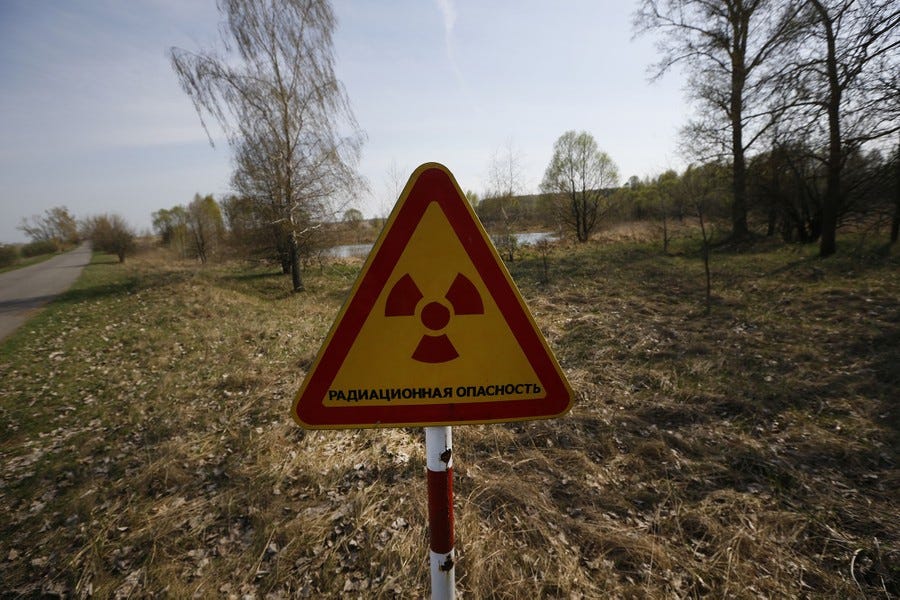
In 1986, the world’s worst nuclear disaster occurred when explosions destroyed a reactor at the Chernobyl nuclear power plant in the Soviet Union. Fires burned for ten days, sending radioactive material across much of Europe.
Less widely known is that in the late 1990s, researchers began planting industrial hemp in the surrounding exclusion zone as part of efforts to remediate contaminated soil.
Why hemp?
Cannabis plants are powerful bio-accumulators. Some experts even refer to them as “hyper-accumulators,” although technically they do not meet the strict scientific definition.
In simple terms, cannabis plants absorb heavy metals from the soil. This is extremely useful if your goal is to clean contaminated land—such as the soil around Chernobyl.
But it is obviously not what you want if the plant is destined to be smoked, inhaled, or ingested.
This is why cannabis undergoes extensive testing for heavy metals. Many farms cannot plant directly in the ground and instead must grow cannabis in raised beds or containers. In some cases, contamination does not come from the soil but from groundwater, causing crops to fail testing even after the plants have grown successfully.
Heavy metals can sometimes be removed through processing.
The bigger problem is pesticides—especially pesticide drift.
Pesticides and Pesticide Drift Are Major Problems in California
California is the breadbasket of America. Regions such as the Central Valley and Salinas—where much of the state’s cannabis is cultivated—are dominated by industrial agriculture.
Strong winds regularly carry pesticides from neighboring crops onto cannabis farms, a phenomenon known as pesticide drift. In some cases, soils have also been contaminated by past pesticide use, and these contaminants can be absorbed by cannabis plants due to their bioaccumulating properties.
In flower products, trace amounts of pesticides may not trigger alarm. But when cannabis is concentrated into oils and extracts, those impurities are concentrated as well. A trace amount in the plant can become a dangerous dose when refined into a vape cartridge and inhaled directly into the lungs.
The extent of this problem became clear in 2024 when a Los Angeles Times investigation found that 60% of randomly sampled cannabis products contained pesticides exceeding safety limits, including known carcinogens. Some vape cartridges contained more than two dozen pesticides.
A follow-up investigation six months later found that little had changed despite public outcry.
SCR’s Unique Location
And this brings us back to Salisbury Canyon Ranch.
The farm is surrounded on three sides by national forest, and there are no neighboring farms nearby. Winds come in from the forest rather than from industrial agriculture.
A short hike from the property leads to Native American cave paintings—it is that remote.
The soil is clean. The air is clean. And the climate is nearly perfect.
This combination of isolation and ideal growing conditions makes SCR uniquely suited to produce clean cannabis biomass at scale.
The Strategic Value of LEEF
A quote from one of the Los Angeles Times investigations highlights the problem:
“The contamination is so widespread there is evidence of insufficient clean-grown weed to supply the state’s $1-billion cannabis vape market.”
One manufacturer reported that 60% of the cannabis crops offered to them contained pesticides not on California’s screening list, and they could only supply clean oil to a limited number of customers willing to pay higher prices.
Our channel checks confirm that building a supply chain that consistently produces clean, pesticide-free weed requires years of vetting partners, running endless expensive tests, and trial & error. It often lacks the scalability and agility that national brands in other industries take for granted.
With a consistent supply of clean biomass combined with the ability to manufacture virtually any type of cannabis extract at extremely low cost, we believe LEEF is building a platform with substantial strategic value.
There are numerous potential acquirers—both inside and outside the cannabis industry—that would want to control such a platform, especially once federal reform occurs.
Could LEEF Be a Billion-Dollar Company One Day?
The opportunity may extend beyond California.
Europe is gradually legalizing cannabis, and markets such as Germany and the UK are becoming increasingly attractive. However, regulatory and testing requirements are extremely strict.
One Portuguese company told us it is currently paying $180 per pound for clean biomass—largely because it must be grown indoors.
We believe SCR could produce 1.3 million pounds of biomass at $8 per pound, potentially increasing to 2 million pounds at $5 per pound over time.
Even assuming a modest $50 per pound export price, that would imply a business capable of generating roughly $90 million in EBITDA.
At a 12× multiple, LEEF could theoretically be worth more than $1 billion.
Optionality
LEEF has spent years building a strong reputation in California, supplying well-known brands such as Wyld, Kiva, and Heavy Hitters.
Now the company is following its customers.
After repeated requests from partners, LEEF expanded into New York last year and is exploring expansion into additional states.
The company also owns a CBD brand, LEEF Organics, which previously sold products through Nordstrom, Marriott, and other high-profile locations before the CBD market downturn.
After the CBD Medicare announcement, management is also exploring potential CBD opportunities in healthcare and possible partnerships, including discussions with NBA player Jimmy Butler, an investor in the company.
Leadership
Another exciting development is that seasoned executive and cannabis investor Jamie Mendola is joining the board and participating in the new funding round.
The company is led by Micah Anderson, whose commitment to organic agriculture dates to his early 20s when he actively protested GMO foods and pesticides. The purity of the company’s products is deeply embedded in its culture.
Summary
LEEF embodies the reason I love investing.
I enjoy discovering something I previously did not understand and finding a diamond in the rough during profound company and industry change.
We are proud that Mindset is helping turn over a new LEEF and excited to help the company build the cleanest, lowest-cost supply of cannabinoids in the world.
P.S. We are working on a much deeper report on LEEF that will be released in the coming weeks.
Stay tuned.